
How Fortinet’s unified SASE approach simplifies security for all users and locations
Key Takeaways
- The shift to hybrid and remote work has increased the need for secure connectivity.
- Fortinet's Unified SASE merges networking and security into one platform, simplifying management and ensuring consistent protection across work locations.
- Fortinet's approach enhances performance and policy consistency.
Why SASE matters now
The modern workforce isn’t centralised. Hybrid and remote work models are now universal – with 63% of organisations supporting hybrid work – creating complex demands for secure connectivity across different locations and users.
Traditional VPNs often struggle with latency, fragmented policies, and poor performance, especially for SaaS apps and remote endpoints.
Meanwhile, adoption of Secure Access Service Edge (SASE) is rapidly accelerating. According to one study, 34% of businesses are already deploying SASE, with another 30% planning to within a year.
Additionally, according to Cybersecurity Insiders, the importance of SASE is growing, with 62% of organisations in 2025 considering it a key strategic initiative, compared to 59% in 2024.
Against this backdrop, Fortinet’s Unified SASE approach stands out by combining networking and security into one platform. With a single agent and unified management console, it removes complexity while ensuring consistent, AI-driven protection for remote users, branch offices, and cloud environments alike.
What is Fortinet’s unified SASE?
So what’s it all about? Why does this convergence matter for IT leaders? Fortinet’s Unified SASE converges critical networking and security functions into a single cloud-native platform, powered by one agent and managed via one unified console.
Essentially, it integrates:
- Networking: Secure SD-WAN
- Security Services (SSE): Secure Web Gateway (SWG), Cloud Access Security Broker (CASB), Firewall-as-a-Service (FWaaS), Zero Trust Network Access (ZTNA), Remote Browser Isolation, and Digital Experience Monitoring (DEM).
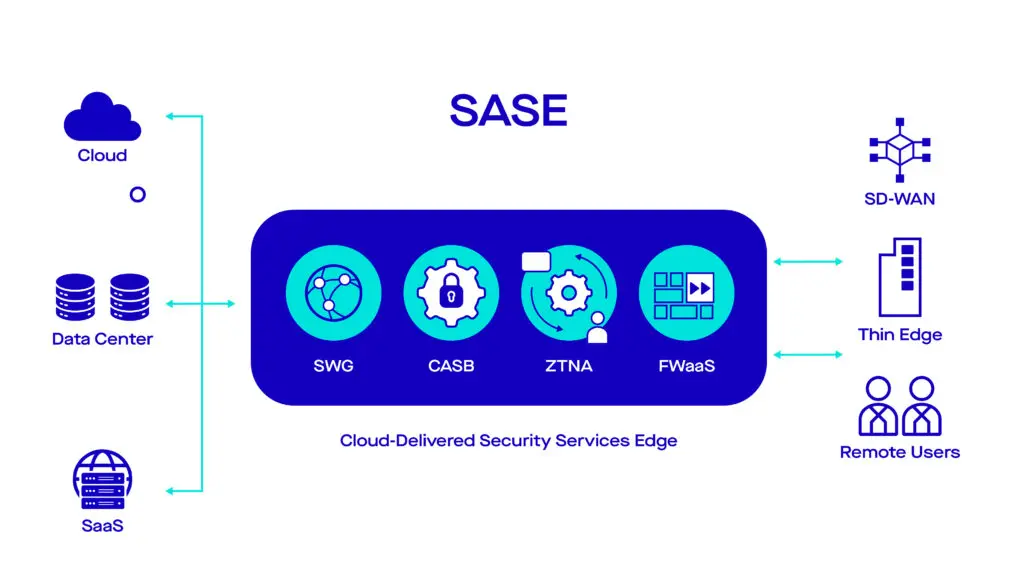
This consolidated approach eliminates tool sprawl, simplifies deployment, and ensures consistent policy enforcement across all users and locations.
Real benefits of a unified architecture
For IT teams, the promise of SASE is about stronger protection, but also about simplicity. By converging networking and security into a unified model, Fortinet removes layers of complexity while delivering the consistency, visibility, and scale today’s enterprises need.
Below is a breakdown of the key operational and security advantages:
One agent, one console
Deploying and managing just one agent and interface dramatically reduces complexity, cutting down on errors, training requirements, and costs.
Consistent security for all users and sites
Unified policy enforcement applies the same protection standards to remote workers, branch offices, factories, and cloud services, closing gaps and ensuring consistency.
Full visibility with integrated data lake
All telemetry, logs, and alerts are centralised into a single data lake, enabling faster detection, investigation, and response. On top of this, Digital Experience Monitoring (DEM) provides real-time insight into how users and applications are performing, allowing IT teams to quickly identify performance bottlenecks or degraded experiences. It’s no surprise that 93% of organisations now view DEM as essential to maintaining both resilience and user satisfaction (Cybersecurity Insiders).
AI-driven threat detection & automation
By leveraging AI and machine learning, Fortinet’s SASE can spot threats in real time, reduce false positives, and automate remediation, improving both speed and accuracy of response.
Built for enterprise-scale environments
Designed for large, complex environments – multi-cloud, IoT-heavy sites, mobile workforces – Fortinet’s SASE delivers resilience, low latency, and high availability at scale.
Data-backed advantages
- Rapid Adoption & Preference: 61% of organisations prefer a single-vendor SASE solution over multi-vendor approaches, seeking to reduce complexity (Cybersecurity Insiders).
- Hybrid Work Demands: For SaaS, cloud infrastructure, and remote endpoints, SASE delivers better performance, security, and policy consistency.
- Market Resilience: Though SASE market growth slowed in 2024, analysts expect a rebound as enterprises re-invest in integrated, cloud-native security.
Why Interactive recommends Fortinet’s unified SASE
Deep expertise
As an Australian end-to-end IT services provider, Interactive specialises in delivering tailored, high-availability IT solutions. Our certified Fortinet specialists bring both technical depth and local market understanding to your deployment.
Strategic alignment
Fortinet integrates seamlessly into Interactive’s managed and professional services ecosystem, enabling rapid adoption and long-term operational success.
Driven by data, supported by service
With Fortinet’s proven platform and industry-backed insights, Interactive ensures your security strategy is both modern and resilient, balancing visibility, performance, and protection.
Future-ready partnership
As threats and infrastructures evolve, Interactive is your long-term partner to refine, optimise, and scale your SASE deployment, keeping you ahead of change.